In industrial maintenance and surface preparation, removing stubborn contaminants like rust, paint, and grease is a constant challenge. Traditional cleaning methods—such as sandblasting, chemical solvents, and mechanical abrasion—often fall short. They can damage the base material, generate harmful waste, and require extensive time and labor. As industries demand more precise, efficient, and environmentally responsible solutions, the portable laser cleaning machine has emerged as a proven alternative.
This technology isn’t just a trend; it’s a tool that delivers results. Using high-energy laser pulses, it targets surface contaminants without harming the underlying material. From removing corrosion on steel structures to stripping paint from aluminum parts and degreasing machinery in minutes, this machine is now trusted in factories, shipyards, and workshops worldwide.
Its mobility makes it especially useful for on-site tasks and large equipment that can’t be transported easily. Whether you’re working in automotive repair, aerospace maintenance, or heavy equipment servicing, laser cleaning is becoming a go-to solution.
In this guide, we will explain how portable laser cleaning machines eliminate rust, paint, and grease effectively—and why they’re rapidly replacing traditional methods.
Table of Contents
- Portable Laser Cleaning Machine Proven to Eliminate Rust, Paint, and Grease
- Understanding the Problem with Conventional Cleaning Methods
- What Is a Portable Laser Cleaning Machine?
- How a Portable Laser Cleaning Machine Works
- Rust Removal Using a Portable Laser Cleaning Machine
- Paint Removal Using a Portable Laser Cleaning Machine
- Grease and Oil Removal Using a Portable Laser Cleaning Machine
- Portability and Field Application Advantages
- Operational Cost and Maintenance Requirements
- Safety and Environmental Considerations
- Practical Applications Across Industries
Portable Laser Cleaning Machine Proven to Eliminate Rust, Paint, and Grease
In industries where metal maintenance and surface preparation are routine, contaminants like rust, paint, and grease cause continuous operational delays and maintenance challenges. Traditional cleaning techniques, though widely used, often have limitations. Sandblasting can damage surfaces, chemicals can pose environmental and health risks, and manual scraping or grinding is time-consuming and inconsistent.
The portable laser cleaning machine now offers a modern solution to these longstanding problems. It removes surface contaminants without damaging the underlying material, reduces waste generation, and simplifies cleaning procedures. It is widely adopted in industrial environments due to its precision, safety, and operational efficiency.
Understanding the Problem with Conventional Cleaning Methods
Traditional surface cleaning methods were developed at a time when environmental regulations were looser and labor costs were lower. Sandblasting, for example, uses high-speed abrasive materials to scrub off contaminants. While effective in some settings, it wears down the surface of metals and requires a controlled environment to prevent airborne hazards.
Chemical stripping methods rely on harsh solvents that are difficult to dispose of safely and require protective gear to handle. Manual grinding with wire brushes or power tools takes time and may lead to surface scratches or inconsistencies.
In many cases, these methods also require significant preparation and cleanup, increasing downtime and operational costs. For companies working under tight schedules, this leads to inefficiencies and unnecessary expense. The portable laser cleaning machine eliminates many of these drawbacks by offering a cleaner, more targeted, and less destructive approach to surface preparation.
What Is a Portable Laser Cleaning Machine?
A portable laser cleaning machine is a compact device that uses focused laser energy to remove unwanted surface layers such as rust, paint, grease, and oxides. It operates on the principle of laser ablation, where laser beams are absorbed by the contaminants rather than the base material. As the laser beam interacts with the surface, it heats the unwanted layer, causing it to vaporize or break apart. Because metals reflect most of the laser’s energy, the laser does not typically damage the base material.
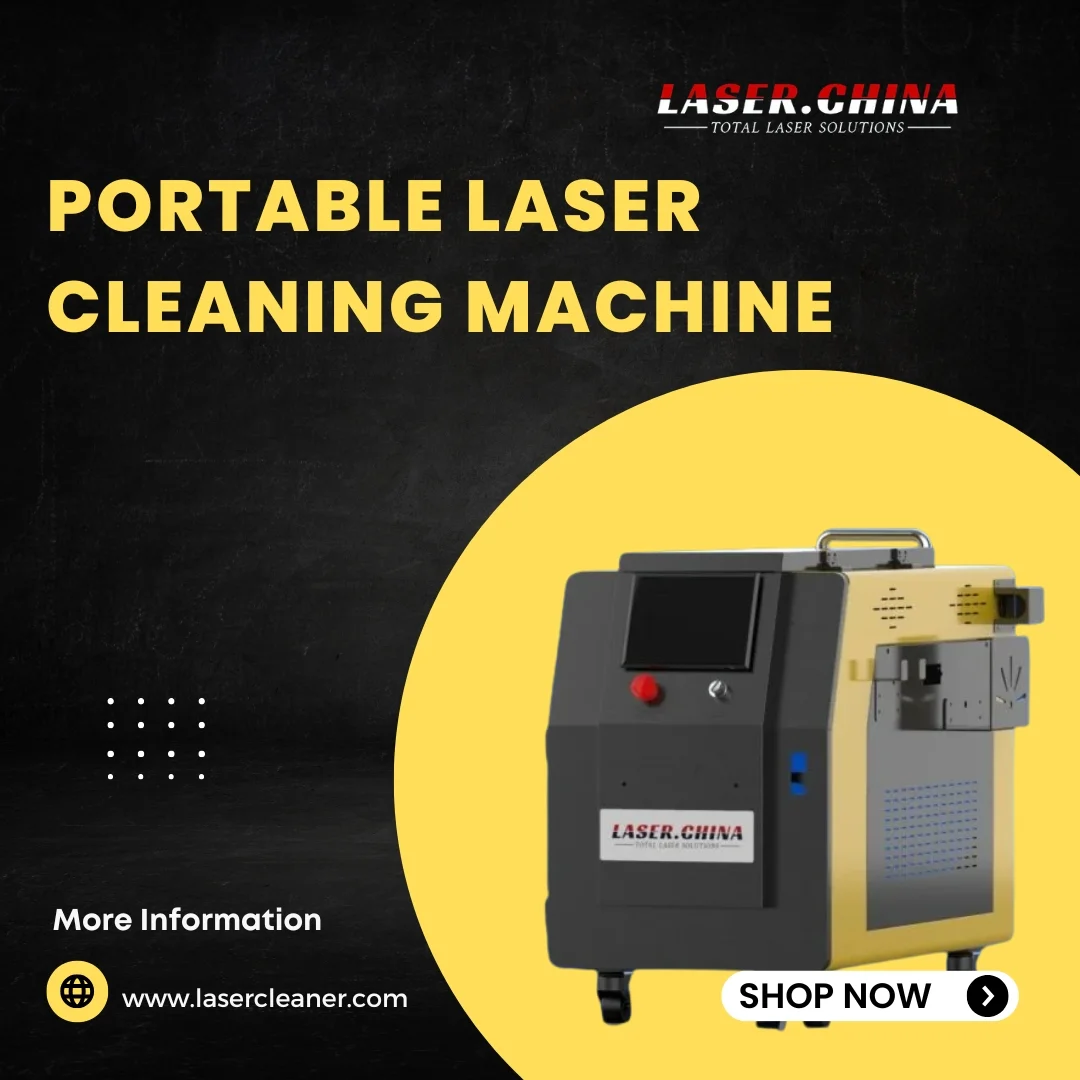
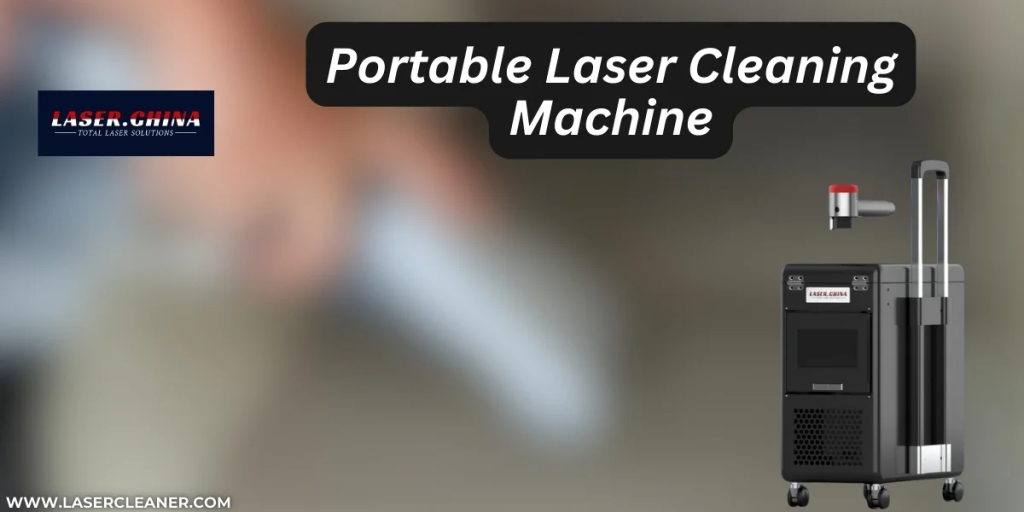
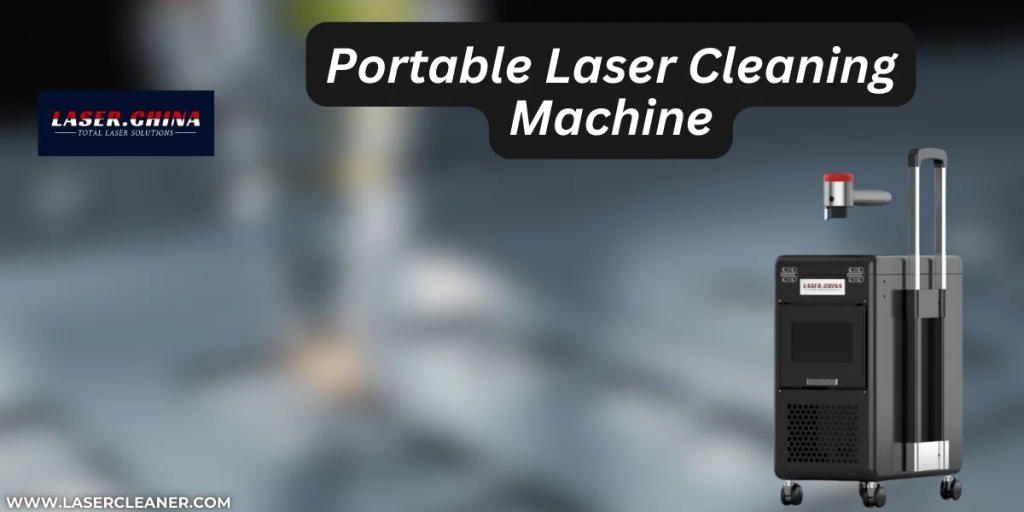
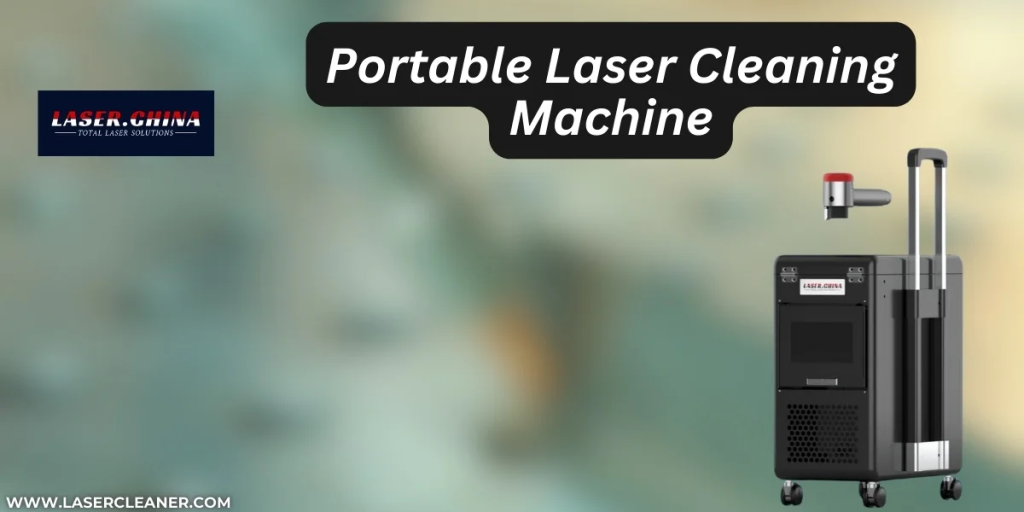
The portable version of the laser cleaning machine is designed for flexibility and field operations. It is built with wheels or lifting handles for easy mobility and often includes a handheld scanning head that allows operators to manually direct the beam across irregular surfaces. These machines usually run on electricity and come with adjustable laser settings to match different cleaning needs. Portability ensures that the machine can be used in workshops, production floors, outdoor construction sites, and maintenance yards.
How a Portable Laser Cleaning Machine Works
The working principle of a portable laser cleaning machine is based on laser ablation. This process starts when the laser beam, typically from a fiber laser source, hits the surface of the workpiece. The energy in the beam is absorbed by the contaminant layer, such as rust or grease, which has a different absorption rate than the underlying metal. This causes the contaminant to either evaporate, combust, or be ejected from the surface in the form of fine particles.
The cleaning head is usually equipped with scanning mirrors that sweep the laser beam in controlled patterns across the surface. By adjusting parameters such as laser power, scanning speed, frequency, and beam width, operators can tailor the process to the specific type and thickness of the contamination. Modern systems also feature user interfaces that allow operators to select pre-programmed cleaning modes based on the material and contamination level.
This entire process takes place without physical contact, abrasives, or solvents. As a result, there is minimal risk of damaging the substrate, and no waste media is produced apart from fine particles, which are typically captured using industrial vacuum systems or local exhaust ventilation.
Rust Removal Using a Portable Laser Cleaning Machine
Rust, or iron oxide, forms when iron reacts with oxygen and moisture. On tools, pipes, vehicles, and structural components, rust can impair functionality and weaken the integrity of the metal. The portable laser cleaning machine provides a controlled method to remove rust without grinding down the metal or applying corrosive chemicals.
When applied to a rusted surface, the laser beam targets the rust layer directly. The rust absorbs the laser energy more effectively than the clean metal underneath, so it is vaporized layer by layer. By adjusting the focus and power, operators can remove only the rust while leaving the metal unharmed. This is especially useful for restoring precision parts, where surface geometry must be preserved.
Unlike sandblasting or manual brushing, laser cleaning does not introduce additional moisture or abrasives to the surface. This ensures that once rust is removed, the metal remains dry and ready for painting, welding, or coating without delay.
Paint Removal Using a Portable Laser Cleaning Machine
Paint is commonly used to protect and decorate surfaces but must often be removed for repairs, repainting, or inspections. Traditional paint removal methods include sanding, chemical stripping, and heat guns. These methods can damage the substrate or pose fire and toxicity hazards. The portable laser cleaning machine provides a safer, cleaner alternative.
The laser beam breaks down the paint’s chemical bonds by applying intense heat to the surface. Different types of paint—acrylic, enamel, epoxy—have varying thicknesses and pigment densities, so laser settings must be adjusted accordingly. The paint layer is gradually ablated without affecting the metal or plastic underneath.
Portable laser cleaning machines are particularly helpful for spot cleaning areas of overpaint, touch-up jobs, or full stripping of paint from large structures. Since the laser does not scratch or erode the base material, the cleaned surface is ideal for re-coating. Also, the process does not involve flammable solvents, making it suitable for use in enclosed environments or near sensitive equipment.
Grease and Oil Removal Using a Portable Laser Cleaning Machine
Industrial machinery often accumulates layers of grease, lubricants, and oils that are difficult to clean with rags or chemical degreasers. These contaminants can interfere with mechanical function, inspection, and reassembly. The portable laser cleaning machine addresses this by using high-frequency pulsed laser beams to break down organic materials like grease and oil.
The laser energy heats the oil-based substances, causing them to evaporate or decompose into carbon residues that can be wiped or vacuumed away. This is especially useful in settings where parts cannot be removed easily or where access is limited. Since the machine does not require disassembly of parts, it saves time and minimizes exposure to chemicals.
The cleaning process leaves no oily residue, which is important for operations requiring clean surfaces for bonding, welding, or painting. Also, since the laser only affects the top surface layer, there is no degradation or wear to the machinery itself.
Portability and Field Application Advantages
One of the strongest features of a portable laser cleaning machine is its ability to function in various environments without being tied to a dedicated station. Portability allows the machine to be used on location—inside a factory, on a ship, or at a construction site. This reduces the need to dismantle heavy components or transport them to a workshop for cleaning.
Portable units are typically built on wheeled frames or housed in compact enclosures that can fit in service vans. The hand-held scanner head is connected via a flexible cable and allows users to move freely around the workpiece. The machine can plug into standard industrial power sources or generator systems in outdoor settings.
This versatility means the same unit can be used across multiple departments or job sites, reducing the need for duplicate equipment. Workers can perform cleaning tasks faster and more efficiently without relying on third-party surface preparation services.
Operational Cost and Maintenance Requirements
Operating a portable laser cleaning machine involves relatively low recurring costs. Since there are no consumables like sand, water, or chemicals, the main operating expense is electricity. Power consumption depends on the machine’s laser wattage. For instance, a 1000W laser may use around 2–3 kWh during operation.
Maintenance is also minimal. The machine requires routine lens cleaning, filter replacement (for models with dust collection), and occasional software updates. The fiber laser source typically has a long service life—often over 100,000 hours—reducing the need for frequent replacements.
Compared to other cleaning methods that require ongoing purchase of media or chemicals and regular servicing of compressors or blast cabinets, the laser system proves cost-efficient over the long term. It also reduces labor costs since fewer steps are needed to prepare, clean, and post-process parts.
Safety and Environmental Considerations
Laser systems are classified based on their output power, and most portable laser cleaning machines fall into Class 4, which requires safety precautions. Operators must wear laser safety goggles and restrict access to the cleaning area during operation. Most units have built-in safety features such as trigger interlocks, emergency stop switches, and key-activated startup to prevent accidental use.
From an environmental perspective, laser cleaning is one of the cleanest surface treatment methods available. It generates no wastewater, uses no hazardous chemicals, and produces only fine particulate matter, which can be captured by local exhaust or filtration systems. This makes it compliant with increasing environmental regulations and ideal for industries seeking sustainable maintenance solutions.
Practical Applications Across Industries
The portable laser cleaning machine is used across a range of sectors due to its adaptability and effectiveness. In the automotive sector, it is used for removing rust from undercarriages, cleaning weld joints, and preparing surfaces for bonding.
In aerospace, it helps with paint stripping and maintenance of high-value components. Manufacturing plants use it to clean molds, remove oil from gearboxes, and prepare surfaces for coating or inspection.
It is also widely adopted in power generation, shipbuilding, railway maintenance, and restoration work. The same core technology serves each industry differently depending on the surface material, contamination type, and accessibility needs. Portability allows one machine to address a variety of tasks without the need for different specialized tools.
Final Thoughts
The portable laser cleaning machine has reshaped how industries approach rust, paint, and grease removal. Its non-contact operation, precise targeting, and minimal cleanup make it a highly practical alternative to outdated cleaning methods.
Unlike sandblasting or chemical stripping, it does not damage the base material, requires no secondary materials, and leaves surfaces clean and ready for immediate use.
Whether you work in manufacturing, maintenance, restoration, or field service, this machine offers a reliable way to improve cleaning speed, reduce waste, and lower long-term costs. It’s not a complex or experimental tool—it’s a proven system already in use across multiple sectors.
If your operations involve surface preparation or equipment cleaning, integrating a portable laser cleaning machine isn’t just a technology upgrade—it’s a smart operational decision.