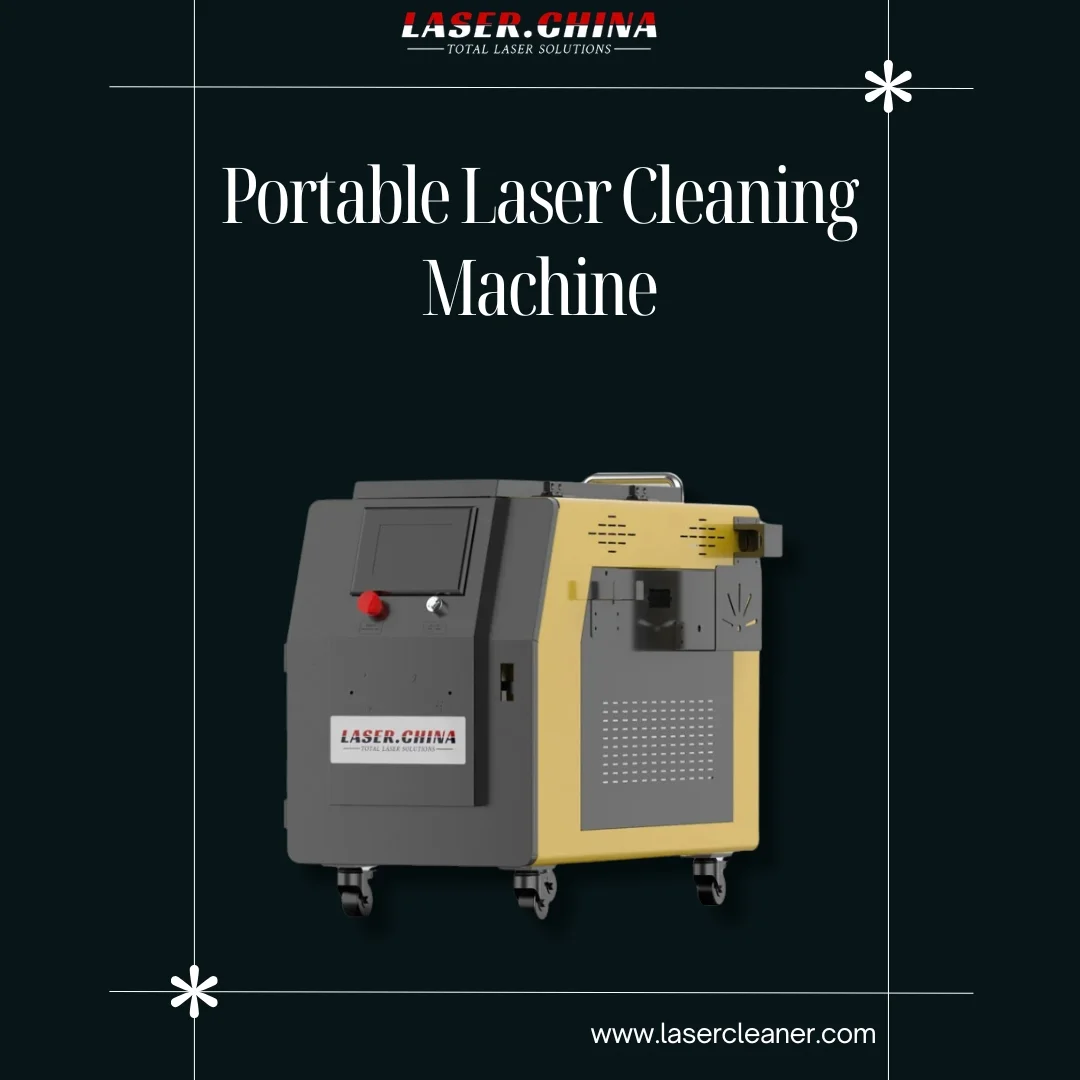
Portable laser cleaning machines are rapidly transforming how industries approach surface preparation, rust removal, and equipment maintenance. Compact, efficient, and non-abrasive, these machines use high-intensity laser beams to strip away contaminants without damaging the underlying material. However, while the technology offers clear benefits, it also comes with serious safety responsibilities and operational requirements that cannot be overlooked.
Operating a portable laser cleaning machine isn’t as simple as switching it on and aiming at a surface. These devices often fall under Class 4 portable laser cleaning machine systems—the highest risk category—which means operators are exposed to potentially dangerous levels of radiation, intense heat, and hazardous fumes. Without the proper safety measures, training, and understanding of the equipment, both workers and nearby personnel can be at risk.
This article provides a detailed guide to the safety protocols and essential skills required for operators of portable laser cleaning machines. Drawing from established standards, real-life case studies, and practical industry insights, we’ll break down the critical steps businesses must take to ensure both safe operation and long-term efficiency. Whether you’re a technician, a site manager, or a company exploring portable laser cleaning machine technology, understanding these requirements is essential for responsible and compliant use.
Table of Contents
- Portable Laser Cleaning Machine Safety and Skill Requirements for Operators
- 1. Laser Safety Enclosures
- 2. Personal Protective Equipment (PPE)
- 3. Electrical Safety & Lockout/Tagout (LOTO)
- 4. Controlled & Prepared Work Environment
- 5. Pre-Operation Setup
- 6. Laser Parameter Configuration
- 7. Active Operation & Monitoring
- 8. Emergency & Shutdown Procedure
- 9. Maintenance & Housekeeping
- 10. Waste Handling & Environmental Safety
- 11. Training & Certification
- 12. Operator Competencies & Skills
- 13. Daily Safety Checklist
- 14. Emergency Response Planning
- 15. Continuous Improvement & Audits
Portable Laser Cleaning Machine Safety and Skill Requirements for Operators
Portable laser cleaning machine is gaining ground fast—cleaning rust off heavy machinery, restoring historical statues, or prepping parts in manufacturing. It’s efficient, eco-friendly, and contact-free. But with power levels reaching 1 kW to 3 kW, safety and proper operator training are non-negotiable. Here’s what every operator and business must understand.
1. Laser Safety Enclosures
A well-designed laser enclosure is the first line of defense in any Class 4 laser installation. These machines emit radiation powerful enough to cause irreversible eye damage and serious burns—not just from the beam itself but also through stray reflections generated by metallic or shiny surfaces. Enclosures are typically constructed from laser-rated materials that block the specific wavelengths used in portable laser cleaning machine operations (commonly around 1064 nm for fiber lasers).
Interlocked doors are vital: if any panel is opened, the system must immediately shut off, preventing unexpected exposure. Enclosures should feature prominent warning signs, such as “DANGER – LASER” or “LASER IN OPERATION”, and entry points must be restricted to authorized personnel only.
Regular testing of interlock systems is essential—these should be checked daily to verify they trigger prompt shutdowns whenever breached. For mobile units, lightweight, collapsible beam curtains with appropriate optical ratings can serve as portable laser cleaning machine enclosures, provided they meet the same safety standards.
2. Personal Protective Equipment (PPE)
Wearing appropriate PPE is non-negotiable for anyone within the laser work zone, and it must be used correctly every time. Laser safety goggles are tailored for the specific wavelength and intensity of the machine—in this case, typically fiber lasers at around 1064 nm, requiring optical densities above 10 to prevent eye damage. Inspecting lenses for scratches or cracks before use is crucial, as even small blemishes compromise protection. Operators must wear flame-resistant clothing to protect against sparks, hot debris, or accidental contact with heated surfaces.
Heat-resistant gloves protect the hands during adjustments or handling cleaned parts that can reach high temperatures. Respirators with P100 filters are recommended when there’s a risk of inhaling fine particulates or fumes; these must be chosen based on workplace air quality assessments.
Safety shoes with steel toes and anti-static soles provide further protection, especially in industrial environments where heavy tools and components are common. Ensuring proper fit and integrity of all PPE is essential—ill-fitting gear or damaged equipment defeats its protective purpose.
3. Electrical Safety & Lockout/Tagout (LOTO)
Portable laser cleaning machine rely on high-voltage power sources, including capacitors that store dangerous energy levels even when the machine is switched off. A solid grounding connection to a clean earth point is critical to prevent electric shock and ensure stable operation. Voltage requirements usually range from 220 V to 380 V, depending on the model, but voltage stability must be monitored and checked before every use. Routine lockout/tagout procedures must be rigorously followed before any maintenance.
LOTO protocols involve isolating the power supply, securing disconnection points with padlocks or tags, and confirming the absence of live energy with a voltage tester. Only OEM-approved fuses should be used, and they must be replaced by trained personnel—the wrong fuse model can lead to malfunctions or hazards. Operators must be trained never to bypass interlock switches or open panel doors under power, as these actions defeat fundamental safety measures and may damage internal circuitry.
4. Controlled & Prepared Work Environment
Selecting and preparing the workspace is vital to prevent hazards. All flammable materials, including solvents, paper, or wooden pallets, should be removed from the work area—ideally keeping them at least 10 meters away. The laser zone must be clearly designated, with physical barriers and signs preventing untrained people from entering. Fire extinguishers rated for electrical (Class C or CO₂) and chemical (Class B) fires should be within arm’s reach, and teams must be trained in their use.
Proper ventilation systems, especially local exhaust ventilation (LEV), should capture fumes, smoke, and particulate generated during the cleaning process. Ceiling fans and HVAC systems alone are not sufficient—they may spread contaminants rather than remove them. Lighting should be adequate to perform fine work yet dim enough to make laser reflections visible.
All system components must be secured and stable—laser heads should be fixed to stable mounts to avoid drifting mid-process. Regular environmental checks, conducted before each work session, help maintain a clean and risk-reduced setting.
5. Pre-Operation Setup
Before powering up the portable laser cleaning machine, a detailed setup procedure is required to ensure safe, effective operation. Begin with a visual examination of the entire setup: check that optics are clean, free of dust, and not scratched; confirm cables are intact and free from cuts or kinks; verify that all housings are undamaged. Next, verify that the power source is correctly connected, with stable voltage supply and verified grounding.
Start the chiller or cooling system early to reach optimal operating temperature, monitoring coolant levels and flow rate to protect internal components and maintain beam quality. If compressed air or gas is used for clearing debris from the beam path, check that pressure lines are intact, securely connected, filtered, and regulated to the correct pressure range—typically 30–50 PSI.
The laser head needs a brief warm-up period (30–60 seconds) to stabilize its output. Finally, perform a quick “waste test” on a scrap piece to confirm sparks are consistent and beam behavior is as expected. A checklist format, completed with operator initials and a timestamp, is an effective way to document the setup before every use.
6. Laser Parameter Configuration
Configuring portable laser cleaning machine settings correctly is essential for balancing cleaning effectiveness and surface integrity. Key adjustable parameters include:
- Laser power (10% to 100%): Lower power levels minimize surface abrasion but may not remove stubborn contaminants; higher levels accelerate cleaning but risk damaging the underlying material.
- Pulse frequency (up to several kHz): Higher frequencies increase material removal rate; lower frequencies offer better control in precision settings.
- Pulse width: Short pulse widths (nanoseconds) are suited for sensitive surfaces; longer pulses generate more thermal energy, effective for heavier contamination.
- Scan modes: Operators select shapes like lines, rectangles, circles, or freeform paths depending on part geometry.
- Scan speed and field lens type: Matching lens focal length (e.g., F160, F210) to part size and adjusting scan speed ensures consistent cleaning without overheating.
Operators benefit from saving these settings as presets for common materials and tasks, which streamlines workflow and ensures repeatability—especially important in industrial environments requiring tight tolerances.
7. Active Operation & Monitoring
During cleaning, safety and quality are driven by active monitoring. Operators must continuously wear their PPE, including goggles, gloves, respirators, and safety shoes. They should position themselves off-axis (avoiding the beam line and reflections) and avoid reaching over active surfaces. Monitoring the cooling system is critical; overheating can distort optics and damage components.
They must also inspect optics for early signs of contamination or hotspots that indicate misalignments or buildup. If dense smoke, chemical odors, or excessive sparks appear, ignition risk may be increasing. At the first sign of danger, operators should hit the emergency stop, withdraw, and assess the situation.
The fire extinguisher must be ready immediately in case of ignition. Effective monitoring relies on discipline and vigilance—operators should avoid distraction and segment time into task phases to systematically check each aspect of the operation.
8. Emergency & Shutdown Procedure
A robust emergency shutdown protocol helps prevent accidents and preserves equipment. To cease operation, operators must release both the laser gun trigger and the host control button. Next, turn off the laser’s keyed power switch and permit cooling liquids to circulate for 3–5 minutes to prevent damage—this is critical for fiber and diode laser components.
Once cooled, turn off the chiller and disconnect compressed gas supplies. Seal the laser head with a dust-cover to prevent contamination. Safely stow the laser wand and tidy cables to avoid tripping. In emergencies—such as beam misfires, sparks threatening to ignite debris, or electrical faults—operators should immediately press the emergency stop, disconnect power supply, and follow LOTO rules before inspecting or restoring the system.
They must then report the incident, document it, and refrain from further operation until the issue is resolved and plant safety teams confirm clearance.
9. Maintenance & Housekeeping
Daily maintenance ensures long-term reliability and safety. Each shift begins with an inspection of optics—clean lenses enhance beam quality and reduce stray reflections, extending the lifespan of targets and reducing risk. Use lens tissue and approved cleaning solutions to remove dust and particulate. Check hoses, cables, and interlocks for visible wear or loose connectors. Measure grounding continuity before engaging power.
Weekly maintenance includes checking gas filters, vent performance, chiller fluid levels, and compressor pressure. Replace compressed air filters and optical components as needed. When replacing fuses or filters, always use manufacturer-approved parts to retain electrical safety and laser integrity. Maintenance work should only occur after LOTO procedures are completed.
A clean environment—free from metal shavings, dust, or flammable residue—reduces the likelihood of ignition or beam instability. Final housekeeping should include wiping surfaces, removing waste, and returning the workspace to a neutral, clean standby state.
10. Waste Handling & Environmental Safety
Laser cleaning generates microparticles, fumes, and contaminants that can include heavy metals, oxides, paint residues, or VOCs. Local exhaust systems should capture these emissions, passing them through HEPA filters that meet or exceed regulatory standards (e.g., EN 1822 or equivalent national standards). Operators must change filters regularly, following suggested intervals based on particle load and device hours.
Captured debris may contain hazardous materials: therefore, it must be treated as controlled waste. Follow local environmental regulations for disposal—usually through certified hazardous waste contractors or designated industrial disposal channels. This not only protects operators and surrounding communities but also ensures compliance.
Environmental safety also includes avoiding groundwater contamination during rinsing or cleaning, maintaining awareness of permissible chemical use, and collaborating with environmental health and safety (EHS) personnel to manage incident reports, inspections, and waste manifest paperwork.
11. Training & Certification
Comprehensive training combines technical knowledge with hands-on practice. Operators should understand laser safety classes, wavelength-specific hazards, the roles of PPE, and the breakdown of protective layers. They should also be fluent in equipment setup, parameter tuning, monitoring during operations, and emergency actions. Training programs should be standardized based on international standards such as IEC 60825 and ANSI Z136.1, and include module-based assessments to verify knowledge retention.
A practical segment follows, where trainees perform supervised operations on benchmark materials, learning to balance cleaning efficiency against potential damage. Certification marks completion; operators receive credentials tied to the specific machine and scenario they trained for.
For mobile operations, appointing a Laser Safety Officer (LSO) is mandatory—this person oversees compliance, conducts periodic audits, manages incident response, and maintains SOP documentation. Regular refresher training—every 6 to 12 months—is recommended to reinforce safe behavior and introduce updates to equipment or procedures.
12. Operator Competencies & Skills
Operating a portable laser cleaning machine system effectively demands more than training—it requires a blend of technical understanding, situational awareness, and problem-solving skills. Operators must grasp fundamental laser principles, such as beam coherence, power density, and reflection behavior, to troubleshoot unexpected results.
They need manual dexterity and mechanical skill when cleaning optics, securing cables, or adjusting mounts. Monitoring tasks require acute senses and discipline—detecting subtle changes in smell or sound can mean spotting overheating lenses or new hazards. Electrical safety awareness and basic wiring knowledge help operators detect grounding issues or damaged cords before they lead to failure or injury.
Being versed in air quality standards and filter lifecycle ensures that waste handling doesn’t become a downstream liability. Clear, concise communication skills are essential in multi-person teams: notifying the LSO or supervisors about irregularities ensures rapid response and preserves safety culture. This wide skill set builds not only safer operation but greater reliability and productivity.
13. Daily Safety Checklist
A daily checklist provides structure and accountability. Each step is verified before operation begins:
- Enclosure Integrity – Doors and curtains secure; interlocks tested.
- Signage and Barriers – Warning signs visible; physical barriers in place.
- PPE Inspection – Goggles, clothing, gloves, shoes, respirators checked.
- Power & Grounding – Voltage stable; ground connection intact.
- Cooling & Air/Gas Lines – Chiller started; gas/is present.
- Optics Condition – Clean lenses; no cracks or contamination.
- Beam Focus Test – Successful spark test on safe material.
- Ventilation Function – LEV or exhaust in operation.
- Emergency Equipment – Fire extinguishers, first-aid kits available.
- Certification Status – Operator credentials valid; LSO present if needed.
The operator signs off each item, timestamping it to confirm readiness and legal accountability.
14. Emergency Response Planning
Preparation is vital. A clear protocol must outline immediate actions and long-term response. Operators should know where all emergency stop buttons are, their locations on the machine and workstation. They need to train on fire extinguisher types—CO₂ versus dry-chemical—and know the correct extinguishing method for electrical or chemical fires. Evacuation routes must be clearly posted and unobstructed.
First-aid training—especially for laser-induced eye injuries or burns—should be reinforced with visual aids and periodic drills. Incident documentation includes date, time, personnel, equipment involved, and response actions taken. Follow-up involves root-cause analysis and policy updates, supervised by the LSO, to prevent recurrence. Full-scale drills—announced or surprise—build muscle memory and reinforce quick, correct reactions.
15. Continuous Improvement & Audits
Even the best systems require periodic review. Monthly internal audits involve checklist review, confirming compliance with enclosures, PPE usage, signage, and emergencies. Quarterly risk assessments look deeper at evolving conditions—new materials being cleaned, changing regulations, or increased throughput—and identify upgrades.
All SOPs should be reviewed whenever new hazards appear or regulatory standards evolve. Incident reports are analyzed for trends and correlated with training gaps or equipment failure. Field notes from operators inform maintenance scheduling—e.g., “lens clouding noticed after X hours”, prompting adjustments in optical cleaning intervals. Post-audit, new training modules or refresher sessions may be released. Tracking these cycles ensures a mature safety culture, minimizing downtime, incidents, or regulatory exposure.
Final Thoughts
Operating a portable laser cleaning machine demands more than just knowing how to pull a trigger. It requires a structured approach to safety, consistent skill development, and a clear understanding of both the equipment and its environment. Every step—from setting up enclosures and selecting the right PPE to configuring beam parameters and handling waste—plays a role in preventing injuries, extending equipment life, and ensuring regulatory compliance.
When operators are well-trained, procedures are standardized, and maintenance is routine, portable laser cleaning machine can be not only efficient but also exceptionally safe. It becomes a reliable, high-performance tool for industrial maintenance, surface restoration, and precision manufacturing.
In the end, safety is not a one-time checklist. It’s a daily discipline—a habit built on clear guidelines, good habits, and team accountability. Whether you’re an operator, supervisor, or business owner, taking the time to establish and follow these principles will lead to long-term success with portable laser cleaning machine systems.