Heavy machinery is a critical asset across industries such as construction, mining, agriculture, and manufacturing. These machines, from excavators and cranes to industrial presses and mining drills, operate under extreme conditions where exposure to moisture, dust, and chemicals is constant. Over time, this exposure leads to rust and corrosion, which can compromise the efficiency, safety, and lifespan of the equipment.
Traditional rust removal methods such as manual scraping, sandblasting, or chemical treatments have been widely used, but they come with limitations. Manual methods are labor-intensive and time-consuming, abrasive methods can damage metal surfaces, and chemical treatments pose environmental and safety concerns.
In recent years, laser rust remover have emerged as a precise and efficient solution for heavy machinery maintenance. These devices use focused laser beams to remove rust at a microscopic level without affecting the underlying metal, offering a safer and more environmentally friendly alternative. They are being increasingly adopted across industries to reduce downtime, improve equipment performance, and extend the operational life of machinery.
In this guide, we will explain how laser rust removers play a role in heavy machinery maintenance and why they are becoming an essential tool for industrial operations.
Table of Contents
- Laser Rust Remover Roles in Heavy Machinery Maintenance
- Understanding Laser Rust Removers
- How Laser Rust Removal Works
- The Need for Laser Rust Removers in Heavy Machinery
- Industrial Applications in Heavy Machinery Maintenance
- Benefits Specific to Heavy Machinery Maintenance
- Implementing Laser Rust Removal in Maintenance Schedules
- Limitations and Considerations
- Future Trends in Heavy Machinery Maintenance
Laser Rust Remover Roles in Heavy Machinery Maintenance
Heavy machinery in industries like mining, construction and manufacturing often operates in harsh conditions that promote corrosion. Rust and grime can build up on metal parts of excavators, cranes, engines, and frames, leading to equipment wear and downtime.
A laser rust remover offers a modern solution by using concentrated light beams to clean metal surfaces. In this process, a laser precisely vaporizes rust without grinding or chemicals, leaving the base metal intact. This non-contact cleaning is far gentler than abrasive blasting, so it avoids surface damage and cuts out hazardous waste.
For example, a fiber-laser rust remover can strip rust off a steel frame quickly and with high precision, making it a powerful alternative to sandblasting or acid baths. In heavy equipment maintenance, this means thorough cleaning with minimal pollution, which in turn extends machinery life and keeps production running smoothly.
Understanding Laser Rust Removers
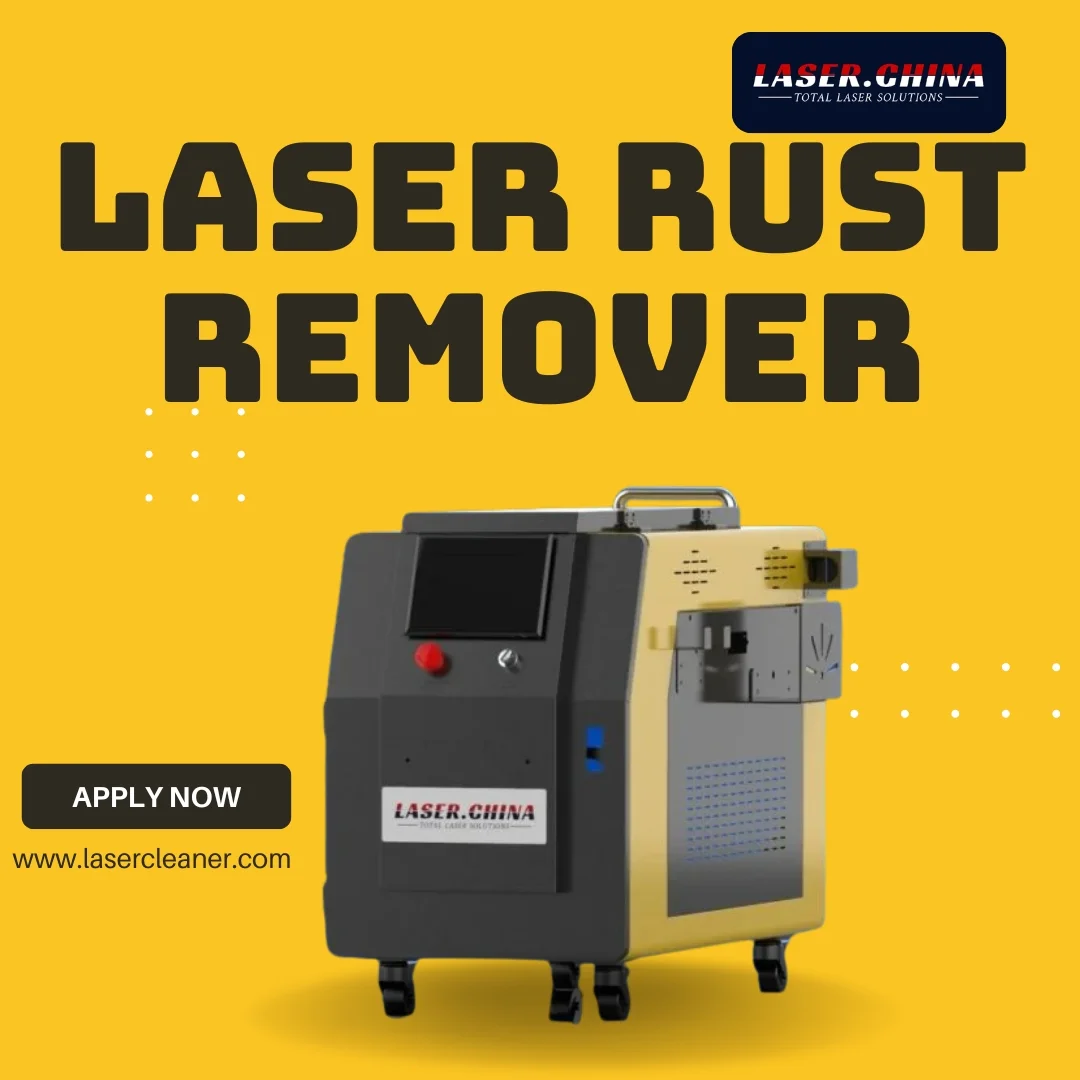
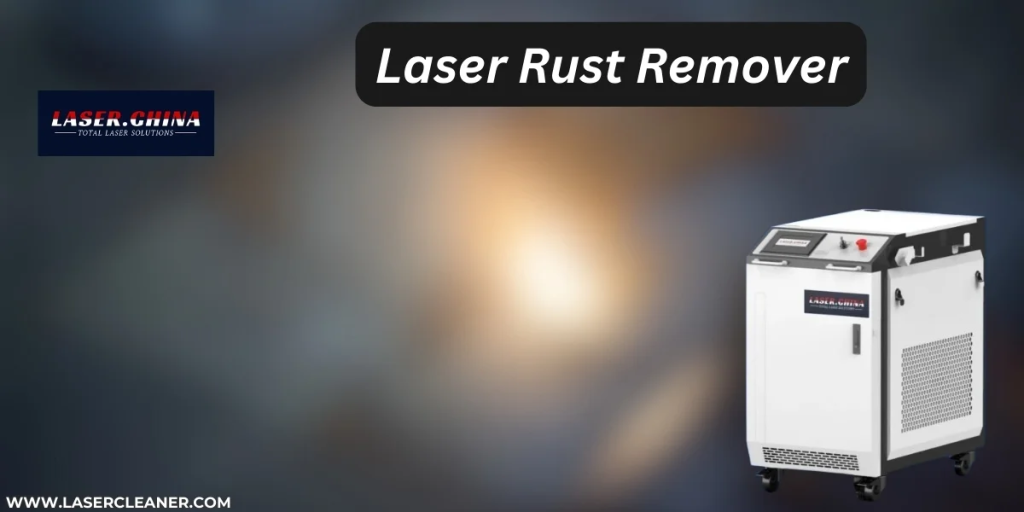
A laser rust remover is essentially a specialized laser cleaning system designed for corrosion removal. It typically uses a fiber laser that emits powerful pulses of light at a wavelength metal readily absorbs. When aimed at a rusty surface, the laser beam breaks down the oxide layer and releases the rust as tiny particles or vapor. Unlike manual scrubbing or blasting, the beam never physically touches the metal, so there’s no wear on the original surface.
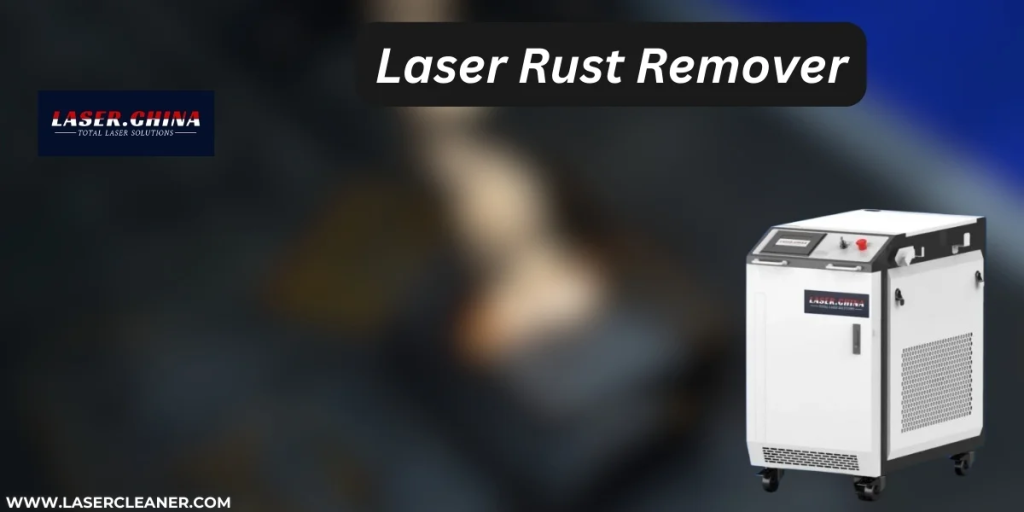
These systems come in various forms. Handheld portable units look like large shop vacuums on wheels with a laser gun, so operators can direct the beam by hand. There are also tripod or robotic-mounted lasers for automated cleaning of large structures. Laser sources range widely in power: small units might use tens of watts for light rust, while heavy-duty rust remover lasers can reach over a kilowatt or more for thick scale.
This power flexibility means a laser rust remover can handle delicate parts as well as extensive rust on big equipment. Modern machines also often include optics and control software to adjust the beam focus and pulse speed, allowing the operator to customize cleaning intensity. In short, a laser rust remover is a versatile, non-contact device—sometimes handheld, sometimes robotic—that uses controlled laser pulses to strip away rust with extreme precision.
How Laser Rust Removal Works
Laser rust removal works through photothermal ablation. The process relies on the fact that rust (iron oxide) absorbs laser energy at a slightly lower threshold than the underlying metal. By carefully setting the laser’s intensity, the beam is strong enough to vaporize or flake off the rust layer while being gentle enough not to melt the steel beneath.
In practice, the laser gun is passed over the corroded metal surface; rust particles rapidly heat up, expand, and break free from the surface, often ejecting as fine dust. Because the metal itself reflects much of the beam once clean, it stays cool and undamaged. After a sweep, what remains is clean bare metal. The only byproducts are tiny flakes or fumes of oxide, which are easily captured by a vacuum system.
In fact, this dust is minimal and poses far less hazard than airborne sand or chemical sprays. Adjusting parameters like pulse rate and scanning speed allows the operator to remove rust layers thoroughly while preserving the base metal’s integrity. This precise process ensures even deeply pitted or uneven surfaces get cleaned uniformly without pressure, leaving nearly zero trace of the old rust.
The Need for Laser Rust Removers in Heavy Machinery
Heavy industrial machines routinely accumulate contaminants like rust, oil, grease, and paint residue that impede their operation. Traditional cleaning methods for such equipment—pressure washing, abrasive blasting, or chemical dipping—have serious drawbacks: they often require disassembling parts, use harsh chemicals or media that damage surfaces, and generate waste that needs disposal. For large equipment, these methods also mean long downtime. In this context, a laser rust remover fulfills a vital role.
It can be used in place on heavy vehicles or stationary machines to clear corrosion and build-up without dismantling. This is safer for the machinery and better for the environment. For example, one laser cleaning service notes that no water or chemicals are needed, so workers avoid contact with toxins and there’s no polluted runoff. Using lasers also helps maintenance crews stay on schedule.
Laser systems remove rust so quickly that machines return to service sooner, which is crucial when downtime costs are high. In fact, in one case study, plant managers observed smoother operations and less frequent breakdowns once they switched to laser cleaning. In summary, heavy machinery needs laser rust removers because they offer a fast, eco-friendly way to eliminate corrosion without harming the underlying metal or worker health.
Industrial Applications in Heavy Machinery Maintenance
Laser rust removers are now applied across many heavy-equipment contexts. In mining and construction, lasers clean large drills, earthmovers, and cranes. For instance, conveyor belts, excavator booms, and dump trucks can be blasted free of rust and coal dust by a high-power laser, restoring metal components to near-new condition.
In maritime and offshore industries, shipbuilders and dock maintenance crews use lasers on ship hulls, propeller parts, and offshore platform components. The laser removes salt-corrosion and old coatings on steel decks and engine parts faster and more precisely than sandblasting, while also preparing the surface for repainting.
Agricultural machinery — tractors, harvesters, and tillers — also benefit: after a season in the field, a laser rust remover can strip away soil-induced rust on gears and frames without taking apart the equipment. Beyond these, industrial cleaning companies use lasers on molds, rollers, rails, and factory machinery to remove rubber, paint or rust layers.
One provider reports using laser cleaning on steam boilers, ship parts, rubber molds, and rails, highlighting the technology’s versatility. In each case, the laser precisely targets the unwanted layer (rust, paint, etc.) while leaving critical machine parts untouched. This adaptability makes laser rust removers a valuable tool for any maintenance crew dealing with heavy steel structures and components.
Benefits Specific to Heavy Machinery Maintenance
For heavy industry, the advantages of laser rust removal are especially pronounced. Efficiency and Downtime Reduction: Because laser cleaning acts quickly and in place, machinery can be serviced faster. Heavy machines don’t have to be stripped down and transported to a cleaning bay; instead, technicians can “paint” the laser over rusted areas on site.
This in-situ cleaning greatly cuts maintenance time and production downtime. For example, some shops report that adding a routine laser sweep during inspections has let equipment run longer between stops. Surface Integrity: Lasers remove rust without grinding the metal, so they do not gouge or weaken structural parts. The underlying metal retains its original hardness and geometry.
This non-contact property preserves heavy parts that might crack or wear under sandblasting. In practical terms, frames, booms and engines last longer. Worker and Environmental Safety: Using lasers eliminates need for harsh chemicals or silica dust. Heavy equipment environments often pose enough hazards, so removing toxic solvents and fine particulates improves safety.
A laser dust extractor system collects all debris, meaning workers avoid breathing abrasive dust or fumes. This green cleaning fits sustainability goals: no wastewater is produced and disposal of hazardous media is avoided. Cost-Effectiveness: Although laser systems require upfront investment, heavy-machine shops see long-term savings. Labor costs drop when one operator with a laser gun can clean what used to take many hours by hand.
Consumable costs (sand, chemicals, abrasives) go away entirely. Many industries note a strong return on investment within a few years because machines require fewer major repairs and replacement parts. In sum, laser rust removers deliver clean, corrosion-free machinery with less effort and waste, yielding smoother production and lower lifetime costs in heavy equipment maintenance.
Implementing Laser Rust Removal in Maintenance Schedules
Integrating laser cleaning into heavy equipment maintenance plans is increasingly common. Maintenance teams often schedule laser cleaning tasks alongside routine inspections. For example, a mine’s maintenance calendar might include a brief laser rust sweep of critical joints or blades every month. Because the process is quick, it can often be done during short downtime windows.
Industry data suggests that facilities using lasers tend to perform maintenance checks more frequently, since the laser does not wear out parts. In practice, a shop might designate one day for laser cleaning during a machine’s scheduled service, targeting areas most prone to corrosion. This proactive approach prevents rust from becoming severe. In factories that have adopted lasers, management noted that downtime fell and scheduling became more efficient.
To implement laser cleaning effectively, technicians should be trained in laser operation and safety, and preventive maintenance protocols updated. By adding “laser clean rust from component X” to maintenance checklists, companies ensure that corrosion control is a standard part of upkeep. Overall, using laser rust removers as part of preventive maintenance helps heavy equipment stay cleaner, extending service intervals and improving reliability.
Limitations and Considerations
Laser rust removal is powerful, but it has practical limits. One main consideration is cost. Industrial laser cleaning units are expensive, often ranging from tens to hundreds of thousands of dollars for high-power systems. There are also operating costs: lasers use significant electricity and often require cooling systems, which add to energy bills. Second, safety and training are critical.
Powerful lasers (Class 4) can cause eye or skin injuries and can ignite flammable dust, so operators must wear goggles and enclosures with interlocks. Heavy machinery shops need procedures to prevent accidents. Third, material limitations exist. Very thick, heavily oxidized layers or certain coatings may take many laser passes to remove, making the process slower. For example, extreme rust or thick old paint on a large surface can be time-consuming for any method, and lasers may struggle where abrasives might remove thick scale faster.
Highly reflective metals like aluminum or brass can bounce the beam back, reducing effectiveness. Also, laser cleaning tends to work best on solid, flat metal; deeply pitted or highly porous surfaces can trap residues. Finally, environmental factors matter. Lasers operate best in controlled settings: very dusty, hot, or explosive atmospheres can interfere with optics or create hazards.
According to one analysis, lasers should not be used in places with flammable gases or unstable power conditions. In summary, while lasers outperform traditional methods in many ways, maintenance planners must account for the equipment’s cost, ensure operator training, and match the tool to appropriate tasks before relying on it for every cleaning job.
Future Trends in Heavy Machinery Maintenance
Looking ahead, laser rust removal technology is set to improve and expand in heavy industry. Advances in fiber lasers continue to boost their power and efficiency. Newer units deliver higher output with lower energy consumption, meaning future laser rust removers will clean faster while using less electricity.
This helps make the technology more affordable to run at scale. We are also seeing growth in automation: maintenance robots and automated systems equipped with laser guns. Integrating lasers with robotic arms or guided vehicles can allow fully automated rust cleaning on large equipment, reducing the need for manual labor. For example, robotic welders often include a laser cleaning head to prepare surfaces.
In the era of Industry 4.0, we may even see predictive systems where sensors detect corrosion buildup and schedule a robot-mounted laser to clean it. Finally, environmental factors will drive adoption: as industries face tighter sustainability rules, the demand for eco-friendly cleaning will grow.
Since lasers produce virtually no chemical waste and remove the need for consumables, companies under regulatory pressure will favor lasers over wet methods. In sum, as lasers get smarter and greener, their role in heavy equipment maintenance is likely to increase, making factories cleaner, more efficient, and better aligned with modern environmental standards
Final Thoughts
Heavy machinery is a backbone for industries that rely on strength, endurance, and consistent performance. Keeping this machinery in proper working condition is not just about operational efficiency but also about reducing risks, cutting maintenance costs, and extending equipment lifespan.
The introduction of the laser rust remover into industrial maintenance has provided a reliable method for tackling one of the most common issues—rust. By offering precise cleaning, minimal damage to base materials, and eco-friendly operation, this technology is shaping how companies approach machinery care.
As industries continue to push for higher productivity and lower downtime, the role of tools like the laser rust remover will expand. It is not only a modern replacement for older rust removal techniques but also a forward-looking solution that supports sustainability and efficiency. Businesses that adopt this technology today are positioning themselves for stronger performance and longer-lasting machinery tomorrow.