Precision machinery relies on exact tolerances and smooth surface finishes to function reliably. Any rust formation — even at a microscopic level — can compromise performance, cause wear, and lead to costly downtime. Traditional rust removal methods like abrasive blasting, chemical treatments, or manual scrubbing can damage sensitive surfaces, alter dimensions, or leave residues behind. These approaches are often unsuitable for parts that demand consistency, accuracy, and repeatability.
This is where laser rust cleaner are gaining traction. Using controlled pulses of laser energy, they remove rust with high precision while avoiding contact with the base material. The technology is increasingly being adopted in sectors where machinery components must meet strict standards — such as aerospace, automotive, medical, and semiconductor manufacturing.
But is this method truly safe for delicate equipment? Can it remove rust without affecting surface geometry, material hardness, or mechanical integrity?
In this guide, we will explain.
Laser Rust Cleaner How It Affects Precision Machinery
Precision machinery operates with strict tolerances and fine surface finishes. Even a small layer of rust can disrupt performance, increase friction, and shorten the life of moving components. Traditional rust removal methods such as sandblasting, chemical cleaning, and wire brushing can be too aggressive or inconsistent for sensitive parts. These methods may damage surfaces, alter dimensions, or leave residues that affect performance. As a result, there is a growing interest in safer alternatives.
One such solution is the laser rust cleaner. This technology uses laser energy to clean metal surfaces without physical contact or abrasive force. It targets rust specifically, removing it without harming the underlying material. It has become a preferred option for many manufacturers working with high-precision parts.
Problem: Rust Is More Than Surface-Level
Rust on precision parts affects more than just the appearance of the metal. Even minor corrosion can cause serious problems in performance and accuracy. Precision components are designed to work within strict limits. A few microns of added thickness from rust or pitting can lead to calibration errors, misalignment, and reduced efficiency. If rust forms on surfaces where parts slide, rotate, or fit together, it can cause sticking, noise, or early wear. In some systems, especially in aerospace or medical tools, this can lead to dangerous failures.
Rust can also affect the lifespan of a machine. It introduces roughness, which increases friction between parts. More friction means more heat and faster wear. Additionally, the presence of rust on tools or dies can result in contaminated products, which is unacceptable in fields like food production or electronics. For all these reasons, removing rust effectively — without compromising the part — is essential.
Traditional Rust Removal Methods and Their Risks
Conventional rust removal involves physical or chemical methods. Sandblasting is one of the most commonly used techniques. It uses high-speed particles to break up and remove rust. However, this method is not gentle. It can remove material from the base metal and damage fine edges or flat surfaces. For parts with close tolerances, this is a serious issue.
Chemical rust removers dissolve rust using acids or other corrosive compounds. They require soaking or spraying, and careful neutralization afterward. Some of these chemicals can react with the base metal or leave residues that affect the part’s future performance. Handling and disposal also pose environmental and safety risks.
Manual methods like grinding or wire brushing depend on operator skill. They often lead to uneven results and can introduce scratches or change the surface finish. None of these methods are ideal for precision equipment, especially when parts must retain exact shapes and smoothness.
Enter Laser Rust Cleaner: How It Works
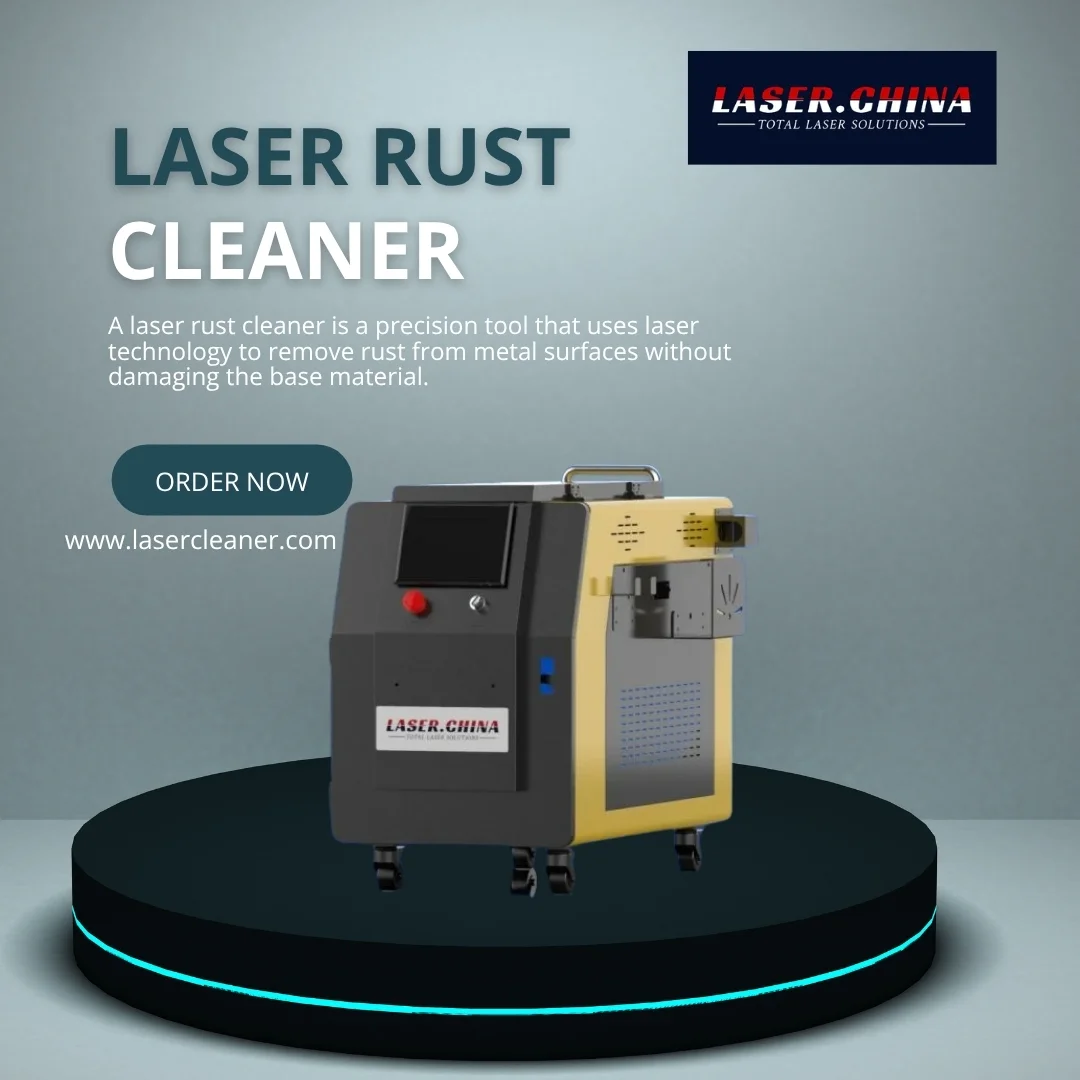
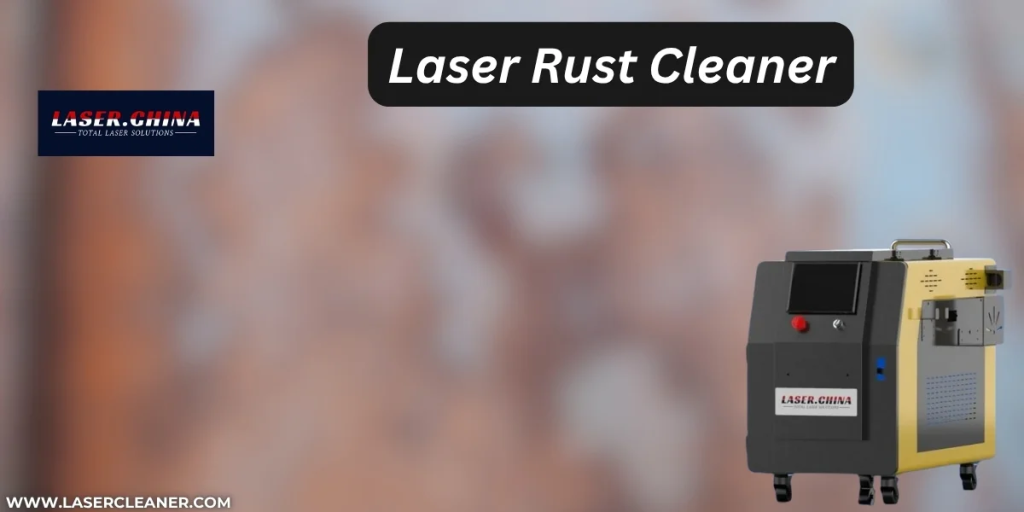
A laser rust cleaner uses controlled laser pulses to remove rust from metal surfaces. It is a non-contact method that works by targeting the oxidation layer. Rust absorbs more laser energy than the clean metal underneath. When the laser beam hits the surface, the rust heats up quickly and vaporizes, while the base metal reflects the energy and remains unaffected.
This process is fast, clean, and highly controllable. The cleaner can be adjusted based on material type, thickness, and sensitivity. Key parameters include laser power, pulse frequency, beam diameter, and scan speed. These settings are managed through software, giving operators precise control over the cleaning process.
Because the laser only interacts with the rust and not the clean metal, the original surface remains intact. This is why laser cleaning is especially suitable for parts where dimensional accuracy and surface integrity must be preserved.
Application on Precision Components
Precision components include tools, parts, or assemblies that are used in systems requiring high accuracy. Examples include bearings, mold surfaces, sealing faces, and sliding guides. These parts must be rust-free but cannot tolerate aggressive cleaning. The laser rust cleaner is designed to handle these conditions.
When applied correctly, the laser removes rust in thin layers without touching the base material. It works well on steel, aluminum, titanium, and many other metals used in precision manufacturing. Because the laser cleaner can be adjusted for energy, frequency, and speed, it’s possible to clean fine parts like threads or small holes without causing any deformation or change in shape.
For moving parts like shafts or bearings, maintaining surface roundness and finish is critical. Laser cleaning ensures that no grinding or brushing affects the geometry. This makes it ideal for parts that are assembled into high-speed, load-sensitive systems.
Why It Works for Precision Machinery
The laser rust cleaner provides several core benefits that make it a good match for precision equipment. First, it is a non-contact process. There is no pressure or mechanical force applied to the part, which eliminates the risk of deformation. This is important for thin-walled components or finely machined surfaces.
Second, there are no chemicals involved. Laser cleaning leaves no residue and does not require post-cleaning rinsing or drying. The process can be completed in clean environments, even in controlled areas like semiconductor or medical facilities.
Third, laser cleaning is selective. The system can be set to remove only rust or oxidation while leaving the base metal untouched. This protects tolerances, surface hardness, and finish quality. Even polished surfaces can be cleaned without losing their smoothness.
Finally, the process is consistent. Once the machine is set up, it produces the same results every time. This repeatability is essential in mass production environments where every part must meet the same standard.
Potential Concerns and Mitigation
Although the laser rust cleaner is safe when used correctly, there are some concerns to be aware of. Overexposure to the laser beam can heat the metal surface. If the laser is left too long in one spot, it may cause a heat-affected zone, leading to slight discoloration or changes in hardness. However, this risk is low when using short-pulse lasers and proper scanning speeds.
Polished or reflective surfaces may reflect part of the laser beam. This can be a safety hazard, especially for operators. To manage this, safety covers, beam shields, and proper laser glasses are used. Many modern machines include automatic sensors that pause the laser if a risk is detected.
Dust and fumes are created during the cleaning process, as rust is vaporized. These particles must be captured using extraction units. Industrial laser cleaners are usually paired with fume extractors to keep the workspace clean and safe.
With proper training and equipment, these issues are easy to manage and do not impact the usefulness of the laser cleaner for precision parts.
Real-World Performance: Data from Field Use
Performance of the laser rust cleaner can be measured by checking surface condition before and after cleaning. Surface roughness (Ra value) is used to measure how smooth a part is. A well-set laser cleaner can remove rust without increasing surface roughness. That means the finish of the part stays the same, which is essential for sealing surfaces or friction-reducing components.
Hardness tests on cleaned metal show that the base material does not lose hardness or strength when cleaned with laser. Surface geometry is preserved, and no warping or bending occurs. Dimensional accuracy remains within microns, which meets the standards for aerospace, electronics, and high-end manufacturing.
Microscopic inspection confirms that there are no cracks, burns, or structural changes on the cleaned surface. These results make laser rust cleaner a trusted method in facilities where part quality is strictly inspected and certified.
Cost and Efficiency Considerations
While the laser rust cleaner requires investment, its efficiency makes it cost-effective over time. Manual rust removal takes time and labor. One technician might spend 20–30 minutes cleaning a single part using brushes or chemicals. With laser cleaning, the same task may take only 3–5 minutes, depending on the rust level.
Labor savings are significant, as one operator can clean many parts quickly. The system requires minimal supervision once set up. Unlike sandblasting or chemical soaking, there is no need for drying, rinsing, or finishing. Clean parts can be used immediately.
In terms of maintenance, laser cleaners have fewer moving parts and require less service compared to blasting equipment. The laser source has a long lifespan — typically tens of thousands of hours — and the overall running cost is low. The machine runs on electricity and does not need consumables like abrasives or chemicals.
For companies that deal with high volumes of parts, the speed and reliability of laser cleaning can lead to fast return on investment.
Compatibility Checklist for Precision Equipment
The laser rust cleaner is compatible with a wide range of metals used in precision applications. These include steel, stainless steel, aluminum, brass, copper, and titanium. The cleaning parameters can be adjusted for each type of metal to avoid overheating or damage.
Bearings, guides, shafts, dies, tools, and inserts can all be cleaned with no impact on their surface accuracy. Threads, fine grooves, and machined surfaces can be cleaned without removing material. The laser can be focused tightly to clean small features or scanned widely to clean large surfaces.
However, materials like glass, plastic, or ceramics are not suitable for laser rust cleaner. The laser may not differentiate between surface contamination and the base material, or it may cause damage. Also, surfaces with complex coatings or multi-layer structures should be tested first.
Before applying laser cleaning in full production, it is best to run a test on a sample part to confirm compatibility and cleaning effectiveness.
Training and Setup Requirements
Operating a laser rust cleaner does not require deep technical knowledge, but some training is essential. Operators must understand how to adjust laser settings, use protective equipment, and monitor surface condition. Most manufacturers provide training and setup assistance when the machine is installed.
The initial setup includes connecting the power supply, fume extractor, and control system. Basic calibration ensures that the laser beam is focused correctly and scanning speed is suitable for the material being cleaned. Once configured, operators can store presets for different part types, making daily use fast and consistent.
Routine checks involve cleaning the lens, checking the cooling system, and inspecting cables or housings for wear. Most systems alert users if anything is out of range. With regular care, the equipment remains reliable for many years.
Environmental Impact
The laser rust cleaner has a low environmental footprint. It does not use any chemicals, so there is no wastewater or chemical disposal involved. There are no abrasive materials to dispose of. The cleaning process produces only small amounts of dust and metal vapor, which are safely captured by extraction systems.
Energy use is moderate, and most models can operate on standard industrial power supplies. The process is quiet compared to blasting, and it produces no vibration or mechanical noise.
This makes laser cleaning suitable for environmentally sensitive industries or cleanroom conditions. It also helps companies meet regulations on emissions, waste, and workplace safety.
Final Thoughts
Precision machinery demands care, accuracy, and preservation at every stage — including maintenance. Rust removal may seem like a simple task, but when tolerances are tight and surfaces are critical, the wrong method can lead to costly damage or reduced performance. The laser rust cleaner addresses this challenge with a controlled, contact-free approach that removes rust without affecting the integrity of the part.
Its ability to target only the corrosion layer, maintain dimensional accuracy, and operate without chemicals makes it a reliable solution for industries that cannot afford compromise. With proper training, setup, and safety measures, laser rust cleaner becomes an efficient and repeatable process that fits into modern production and repair workflows.
As more manufacturers adopt advanced technologies for maintenance, the laser rust cleaner stands out not only for its precision but also for its long-term cost savings and environmental advantages. For any operation focused on keeping high-performance equipment in top shape, it’s a practical step forward.