Removing paint from vehicles has always been a critical step in automotive restoration, repair, or refinishing. Whether dealing with an old classic car or prepping a modern vehicle for a new coat, paint removal must be done with precision, care, and efficiency. Traditional methods like sanding, chemical stripping, or media blasting have been widely used, but they often come with serious downsides—such as surface damage, environmental hazards, long labor hours, and inconsistent results.
As technology evolves, a more controlled and cleaner solution has emerged: laser paint remover systems. These systems are transforming how professionals approach surface preparation in the automotive industry. By using focused laser beams to remove paint without harming the underlying material, this method offers an innovative way to strip coatings with minimal mess and high accuracy.
Laser paint removal isn’t just about better results—it’s about reducing operational downtime, improving safety, and meeting the high demands of today’s auto body standards.
In this guide, we will explain how laser paint removers work, their advantages in automotive applications, and why they are becoming the go-to method for modern surface preparation.
Table of Contents
- Laser Paint Remover and Its Role in Automotive Paint Removal
- The Problem with Traditional Paint Removal Methods
- Enter Laser Paint Remover: A Precise Solution
- Laser Paint Remover in Automotive Use: Real-World Benefits
- Applications in Automotive Work
- Use in Aviation Paint Removal
- Challenges and Considerations
- Regulatory and Safety Aspects
- Future of Laser Paint Removal in Automotive Industry
Laser Paint Remover and Its Role in Automotive Paint Removal
Paint removal in the automotive industry has always been a complex task. Whether it’s restoring a classic car or preparing a vehicle for a fresh coat, the process must be precise, safe, and efficient. Traditional methods like sanding, chemical strippers, or abrasive blasting are often messy, time-consuming, and potentially harmful to both the surface and the environment.
The Problem with Traditional Paint Removal Methods
In the automotive world, removing paint isn’t just about stripping color — it’s about preserving the material underneath, especially in cases where restoration or repainting is required. But traditional paint removal comes with a list of issues.
1. Manual Labor and Time
Traditional paint removal in the automotive sector is labor-intensive. Sanding by hand or using power tools takes significant time, especially when removing multiple layers of paint or dealing with complex vehicle contours. Manual work also introduces fatigue and variability between operators, which affects consistency.
While some automated sanding equipment exists, it still requires supervision, setup, and adjustment for different surfaces. These time-consuming processes reduce overall efficiency, especially in busy auto body shops.
2. Surface Damage
Mechanical paint removal methods such as grinding, sanding, or abrasive blasting often cause unintended surface damage. These techniques can wear down the metal beneath the paint, especially on thin automotive panels. This not only affects the structural integrity but also creates uneven surfaces that require additional filler or correction.
In restoration work, especially with older vehicles, the risk of damaging original components makes these methods less desirable.
3. Chemical Hazards
Chemical strippers used for paint removal are hazardous to both workers and the environment. Many contain volatile organic compounds (VOCs) that release toxic fumes, requiring proper ventilation and personal protective equipment. Prolonged exposure can lead to skin irritation, respiratory problems, and long-term health risks.
In addition, chemical waste disposal must meet environmental compliance standards, increasing operational burden for auto shops.
4. Cleanup and Waste
Mechanical and chemical paint removal methods generate considerable waste. Sanding and blasting leave behind dust, debris, and media residue that must be cleaned thoroughly to avoid contamination of repainting areas. Chemical stripping creates liquid waste that needs special handling.
The cleanup process adds hours to each job, increases labor costs, and reduces shop efficiency. Improper cleaning can also compromise the adhesion of new paint layers.
Enter Laser Paint Remover: A Precise Solution
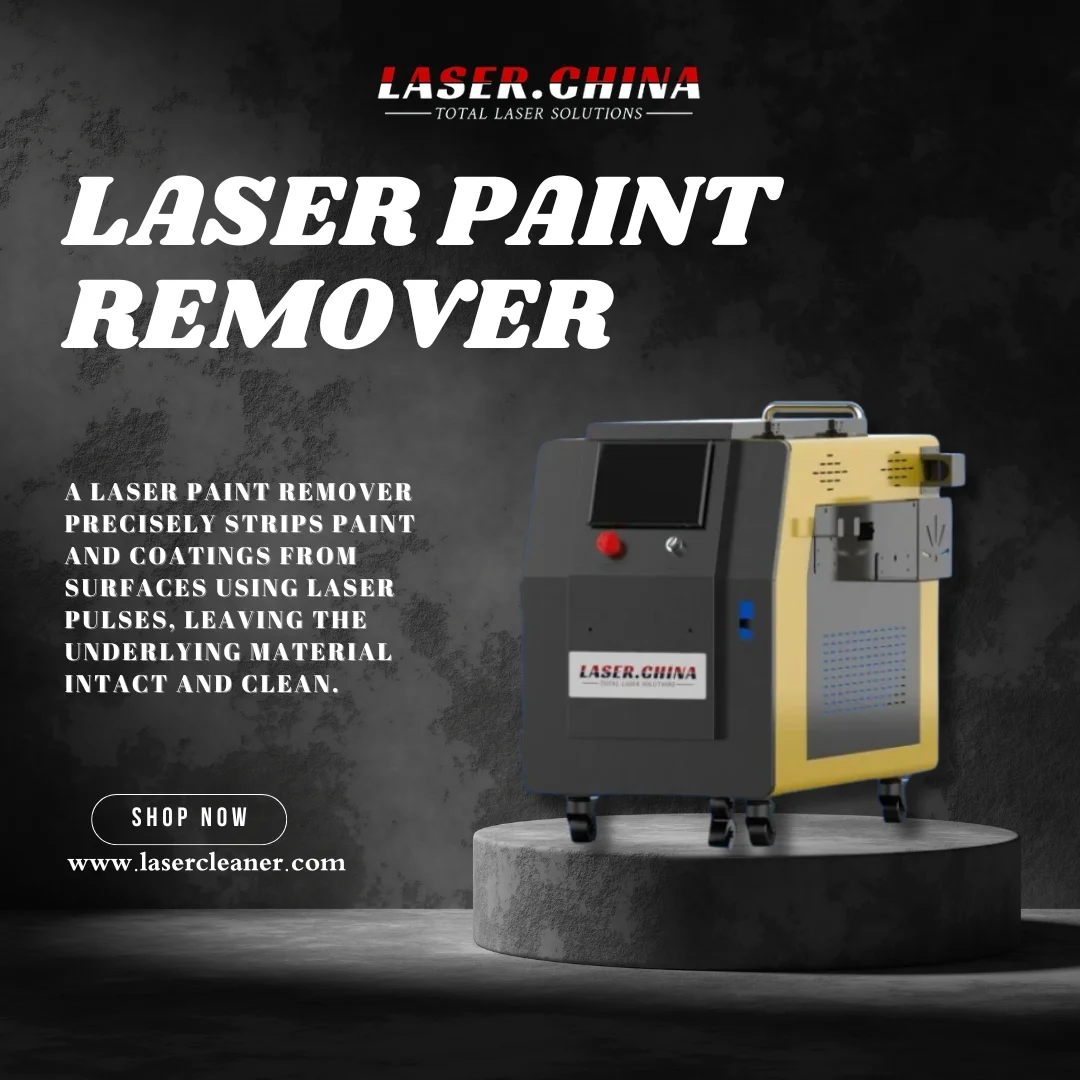
The laser paint remover offers a modern alternative that addresses the common issues associated with traditional paint stripping. This system uses concentrated laser beams to remove paint through a process called laser ablation. The laser targets the paint layer specifically, heating and vaporizing it without physically touching the surface.
Unlike sanding or blasting, there is no abrasive contact, which significantly reduces the risk of damaging the underlying metal or primer. The laser paint remover operates cleanly, precisely, and with minimal waste, making it a practical solution for modern automotive applications.
Laser Paint Remover in Automotive Use: Real-World Benefits
Laser paint remover is reshaping how automotive professionals handle surface preparation. Its real-world benefits are rooted in precision, cleanliness, and reduced downtime, making it a practical upgrade from traditional methods.
1. Precision Without Damage
One of the core benefits of a laser paint remover is its precision. The laser can be adjusted to target only the paint layer, avoiding the base metal, primer, or surrounding parts. This is particularly useful for preserving original vehicle panels during restoration or when working on sensitive surfaces.
The non-contact nature of the laser means there is no friction, scratching, or material loss. The result is a clean, bare surface ready for priming or repainting, with minimal correction required afterward.
2. Cleaner Work Environment
Laser paint removal produces far less mess compared to traditional methods. Instead of dust, grit, or chemical runoff, the process generates microscopic particles that are immediately extracted by an integrated fume removal or vacuum system.
This leads to a cleaner workspace, reduces the need for post-cleaning, and lowers the risk of contamination in adjacent work areas. Cleaner operations also support better air quality, improving safety and comfort for technicians in the shop.
3. Faster Turnaround Times
Although laser paint removal may not appear faster in raw square footage per minute compared to large-scale blasting, it reduces overall job time significantly. There is no need to tape off surrounding areas extensively, clean up residue, or perform corrective work due to surface damage.
For many automotive tasks — especially targeted paint stripping — the laser paint remover gets the job done faster when factoring in total labor, prep, and cleanup time.
4. Lower Long-Term Costs
The initial investment for a laser paint remover can be high, but the operating costs are lower over time. There are no recurring consumables like sandpaper, abrasive media, or chemical strippers. Maintenance requirements are minimal, and the energy usage is typically low for handheld or medium-duty units. Additionally, reduced labor time and less need for surface correction or repainting help lower costs over multiple jobs. For shops with consistent demand, the return on investment improves with continued use.
Applications in Automotive Work
Laser paint removers are not just limited to full-body stripping. They’re increasingly used in:
1. Spot Repairs
In automotive work, not all paint jobs require complete stripping. Sometimes only a panel or small section needs to be prepared for repainting. A laser paint remover is ideal for these tasks, offering precise and localized paint removal without the need to mask off surrounding areas.
This level of control helps technicians perform quick, clean spot repairs without introducing dust or overspray, making the process more efficient and contained.
2. Rust Treatment Prep
Rust removal often begins with stripping the paint to reveal corroded metal underneath. Laser paint removers can cleanly remove the paint layer and also treat minor surface rust in the same pass, especially with moderate-power lasers.
Unlike grinders or sanders, which may grind away healthy metal along with rust, laser systems target only the affected area, preserving more of the original structure. This results in better surface prep for rust repair or patch welding.
3. Weld Preparation
Clean metal is essential for successful welding. Paint, primer, oil, or corrosion on the surface can cause weak welds or contamination. A laser paint remover is effective for preparing weld zones by quickly clearing away surface coatings without damaging the base material.
This method is faster and cleaner than mechanical grinding and avoids the introduction of abrasive particles that could interfere with the welding process.
4. Paint Removal in Tight Spaces
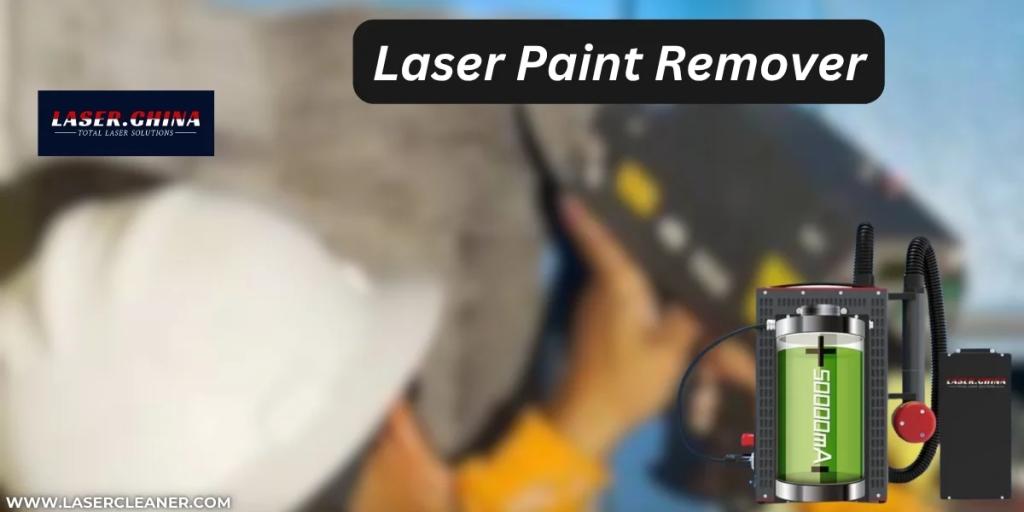
Certain parts of a vehicle, such as inside wheel arches, door jambs, or around complex body curves, are difficult to reach with sanding tools or blast nozzles. Laser paint removers, especially handheld fiber laser models, are well-suited for these areas.
The focused laser beam can be directed with precision into confined or awkward spaces, stripping paint effectively without requiring disassembly or risking damage to adjacent components.
Use in Aviation Paint Removal
Beyond cars, laser paint remover systems are also used in the aviation industry for stripping paint from aircraft surfaces. Aircraft require precise, non-damaging paint removal because structural integrity is critical, especially with aluminum or composite materials.
The laser’s ability to remove paint without abrasion or chemical impact makes it ideal for aerospace applications. This crossover from aviation to automotive use highlights the reliability and control of laser paint removal systems.
Challenges and Considerations
Despite the advantages, laser paint removers come with some considerations:
1. High Upfront Cost
One limitation of laser paint removers is the initial purchase price. Industrial-grade systems can range from $10,000 to $100,000 depending on power, size, and automation features. While handheld units are more affordable, they still represent a substantial investment for small or new auto shops.
However, this cost can be offset by operational savings, faster job completion, and the ability to offer premium services.
2. Training Required
Using a laser paint remover effectively requires training. Operators need to understand how to set the correct power levels, adjust the focus, and follow safety procedures. Without proper knowledge, there’s a risk of incomplete paint removal or accidental damage to the surface.
Most manufacturers offer training resources or on-site demonstrations, and the learning curve is manageable for technicians already familiar with surface prep equipment.
3. Slower for Large Areas
For full-body paint stripping, laser paint removers can be slower than sandblasting or chemical dipping, especially at lower power levels. While laser systems are precise and clean, they remove material in narrow passes, which takes longer to cover large panels.
Automated robotic systems can speed up the process, but they come at a higher cost. For bulk removal, lasers are better suited for targeted or sensitive work rather than large-scale high-volume tasks.
Regulatory and Safety Aspects
Laser paint removal is generally safer for the environment compared to chemical methods, as it produces no harmful runoff or airborne VOCs. However, it does require strict adherence to laser safety protocols. Operators must wear wavelength-specific safety glasses, and systems should be used in designated areas or with shielding to prevent accidental exposure. Most units come with built-in safety features, such as interlocks and emergency shutoffs, to ensure safe operation.
Future of Laser Paint Removal in Automotive Industry
Laser paint remover systems are gaining traction in automotive applications due to their precision, cleanliness, and cost-efficiency. As technology improves and equipment becomes more affordable, adoption is expected to increase among restoration shops, body repair centers, and even OEM facilities.
The move toward environmentally friendly, low-waste processes also supports the shift to laser systems. In the coming years, it’s likely that laser paint removal will become a standard tool in professional automotive work.
Final Thoughts
The adoption of laser paint remover technology in the automotive industry is more than just a trend — it’s a response to the growing need for precision, safety, and efficiency. Traditional paint removal methods come with risks: surface damage, chemical hazards, inconsistent results, and time-consuming cleanup. In contrast, laser paint removers offer a controlled and contactless process that targets only the paint layer, leaving the underlying surface untouched.
For auto body shops, restoration experts, and manufacturers, this means better outcomes with fewer steps. Whether preparing a panel for repainting, removing rust, or handling sensitive areas, the laser provides the accuracy required without the mess or waste. And while the initial cost is higher than conventional tools, the long-term savings in labor, consumables, and rework justify the investment.
As the industry moves toward cleaner and more reliable technologies, laser paint removers are becoming a smart, sustainable choice. They’re not just improving workflows — they’re raising the standard for what quality surface preparation should look like.