Laser cleaning, often called the green cleaning technology of the 21st century, is redefining industrial surface treatment. Unlike traditional methods such as chemical, abrasive, or dry-ice cleaning, laser cleaning offers a non-contact, precise, and eco-friendly alternative. By using focused laser beams to remove contaminants, coatings, rust, or paint from metal and composite surfaces, Laser Cleaning in the Automotive Industry ensures clean results without damaging the substrate.
Applications of Laser Cleaning in Automotive Industry
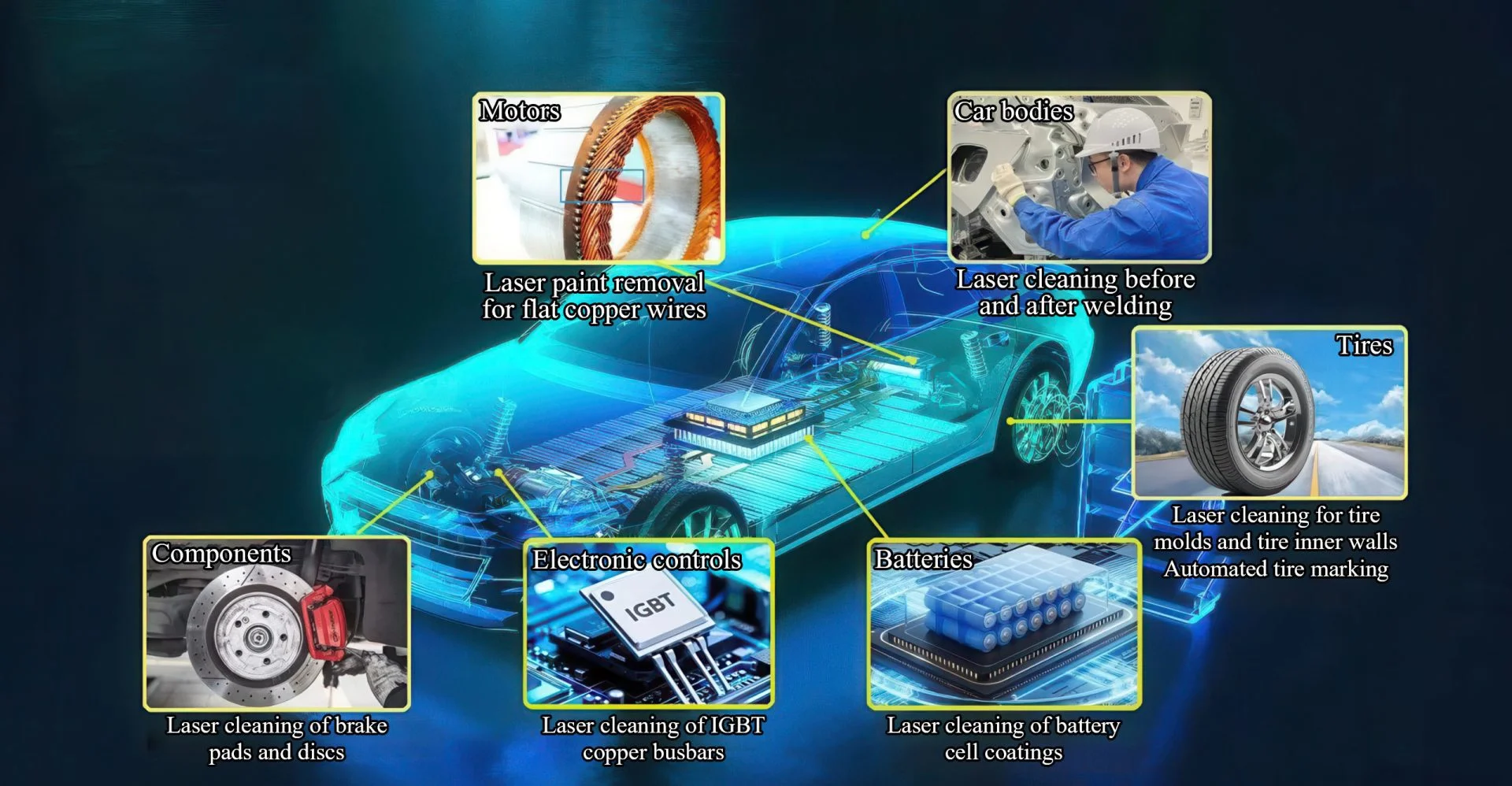
In the automotive sector, where precision, quality, and sustainability are top priorities, laser cleaning technology is emerging as a game-changer. From electric vehicle batteries and motors to car bodies and electronic components, it provides reliable, automated, and cost-effective cleaning solutions that traditional approaches simply can’t match.
What Is Laser Cleaning Technology?
Laser cleaning is a process that uses pulsed or continuous laser beams to vaporize or remove surface contaminants. The beam is directed at the material, and through a combination of rapid heating, expansion, and ablation, the unwanted layer is removed—whether that’s rust, paint, grease, or oxides.
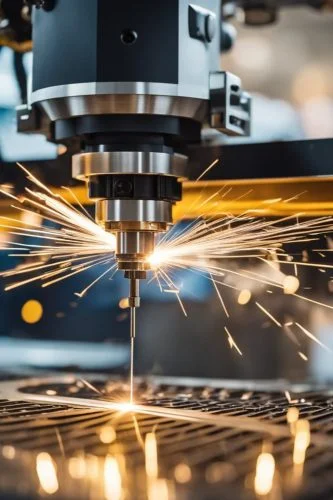
The process can be fine-tuned depending on the surface type and thickness of the contaminants. Fiber and pulsed lasers are the most common types used in the automotive industry because they provide excellent control, precision, and energy efficiency.
The result is a clean, residue-free surface ready for bonding, welding, coating, or painting.
Advantages of Laser Cleaning in Automotive Applications
1. Environmentally Friendly
Laser cleaning eliminates the use of chemical solvents and blasting media, meaning no secondary waste or pollution. It aligns perfectly with the automotive industry’s growing commitment to sustainability and carbon-neutral production.
2. High Precision and Consistency
The process allows micrometer-level control, ensuring only the unwanted layer is removed while keeping the base material intact. This is critical when working with delicate electronic components, thin metal sheets, or painted surfaces.
3. Easy Automation
Laser cleaning systems can be fully integrated into automated production lines or robotic systems. This ensures consistent performance, minimal human error, and higher throughput—ideal for large-scale car manufacturing environments.
4. Non-Contact and Damage-Free
Because it’s a non-abrasive, non-contact process, laser cleaning avoids mechanical wear and surface deformation, extending the life of parts and tooling.
5. Cost-Effective in the Long Run
While the initial investment can be higher than traditional methods, operational costs are significantly lower. There’s no need for consumables, waste management, or frequent equipment replacement, making it a smart long-term investment for manufacturers.
Key Applications in the Automotive Industry
1. Electric Vehicle (EV) Battery Production
Laser cleaning plays a critical role in the production of EV batteries. Before welding or bonding battery cells, the surfaces must be completely clean to ensure strong, conductive joints. Laser systems remove oxides and residues from copper, aluminum, or nickel tabs, resulting in improved electrical performance and safety.
2. Motor and Electronic Components
In electric motors and control systems, even the smallest layer of oxide or oil can affect conductivity and reliability. Laser cleaning provides ultra-precise surface preparation for components like rotors, stators, and connectors—improving efficiency and reducing failure rates.
3. Car Body and Chassis Preparation
Before welding or coating, the metal body panels of vehicles must be cleaned of rust, oil, or old paint. Laser cleaning not only ensures a pristine surface but also enhances welding quality and paint adhesion. It’s also used for paint stripping and selective cleaning during repair or restoration work.
4. Automotive Tooling and Mold Maintenance
Molds and dies used in the production of automotive parts often accumulate residues and release agents. Laser cleaning removes these contaminants without scratching or altering the surface geometry, helping maintain precision and extend the life of expensive tooling.
Impact on Production Efficiency and Quality
Laser cleaning improves both production speed and quality control in automotive manufacturing. Since the process is dry and instantaneous, there’s no waiting time for drying or cooling—making it highly efficient for continuous production lines.
Additionally, the precision of laser cleaning ensures uniform results, which directly affects the quality of weld seams, coatings, and bonds. By reducing defects, rework, and downtime, manufacturers can achieve higher overall productivity.
Modern laser cleaning systems also feature real-time monitoring, allowing automatic adjustment of power and focus based on the material’s surface condition. This smart integration supports Industry 4.0 automation goals and ensures consistent output even across high-volume production runs.
Challenges and Limitations
Despite its many advantages, laser cleaning is not without challenges:
- High Initial Cost: The technology requires significant upfront investment in laser systems and automation integration.
- Technical Expertise: Operators must be trained to handle laser parameters, safety protocols, and maintenance.
- Material Compatibility: Some reflective materials or complex geometries require careful adjustment of laser wavelength and power.
- Safety Considerations: Proper shielding and protective equipment are essential to prevent eye or skin exposure to high-intensity beams.
However, as laser technology becomes more affordable and user-friendly, these barriers are gradually diminishing.
Future Prospects and Innovations in Laser Cleaning in the Automotive Industry
The future of laser cleaning in the automotive industry looks bright. With rapid advancements in laser power, portability, and control software, the technology is becoming even more versatile and cost-effective.
Integration with Robotics and AI
Robotic arms equipped with laser heads can perform automated surface cleaning with adaptive precision. AI-based systems can analyze surfaces and adjust laser parameters in real time, optimising energy use and minimizing waste.
Growing Role in EV and Lightweight Manufacturing
As electric vehicles and lightweight materials (like aluminum and composites) become more prevalent, laser cleaning offers unmatched precision for pre-bonding and pre-welding preparation. This supports the shift toward energy-efficient, sustainable manufacturing.
Sustainability and Smart Factories
Laser cleaning aligns perfectly with global trends in green manufacturing and smart factory automation. By reducing environmental impact and operational costs, it positions itself as a cornerstone of modern automotive production.
Laser cleaning is rapidly transforming the automotive industry by offering a powerful combination of efficiency, precision, and sustainability. From preparing EV batteries and motors to maintaining car bodies and molds, it ensures high-quality results without the environmental drawbacks of traditional cleaning methods.
As automotive manufacturing continues to embrace automation and eco-friendly solutions, laser cleaning stands out as a core enabling technology for the factories of the future, helping manufacturers achieve cleaner, faster, and greener production processes.